
The Best Way to Teach Letters in Kindergarten
Let’s be honest for just a moment… the amount of skills kids are learning to prepare them to read is mind boggling. There are so many pre-requisites that help set children up to become independent readers—not just prove they can read at a certain level.
Building phonological awareness (starting with rhyming and alliteration), cementing letter knowledge, segmenting and blending, phonics, and phoneme manipulation are all part of the puzzle.
I get it… it can quickly become overwhelming. While some skills are definitely linear in progression, others are developed simultaneously. I recently shared some tips for building print awareness, and as students are becoming more familiar with those skills, we are also working to build their letter knowledge.
Why Teaching Letters Matters
Letter knowledge—the ability to recognize, name, and connect letters to their most common sounds—is one of the strongest predictors of later reading success. The earlier and more consistently we reinforce it, the stronger our students’ literacy foundation becomes.
Several months ago I shared the what and why behind building letter knowledge, and you can check out those details on this post. Today, I want to share the best ways to teach letters in Kindergarten that are simple, effective, and fun.
How Many Letters Should You Teach Each Week?
While people have different opinions on how many letters a week to focus on, I’ve found that going deep with 2 letters per week in Kindergarten is the most effective – although 3 letters is another option. This way we are providing enough exposure and practice with each letter while not taking an entire week to focus on each letter.
Step 1: Introduce the Letter Explicitly
On the first day with a new letter, I start by explicitly telling students the letter we’re practicing and showing it in uppercase and lowercase form.
We talk about what we notice (curves, straight lines, no curves, etc.), then practice making the letter’s most common sound. To add fun, we watch a quick StoryBots letter song. (Here’s the full StoryBots alphabet playlist on YouTube if you want to save it!)
Step 2: Create a Circle Map of Letter Sounds
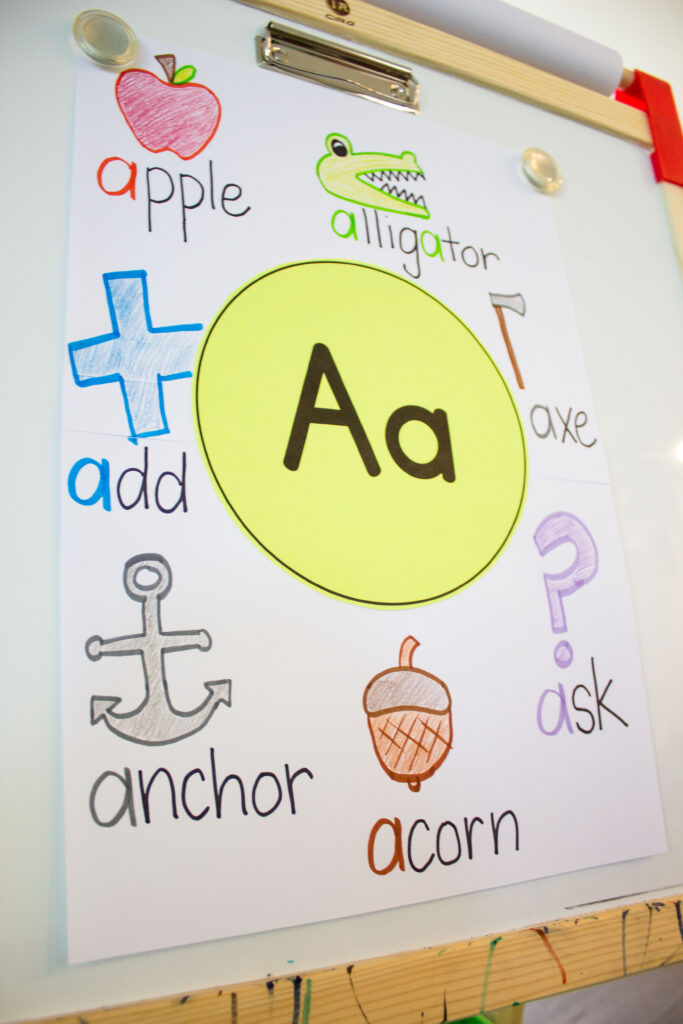
After the introduction, we move into a circle map activity. Place the uppercase and lowercase letter in the center of chart paper and let students brainstorm words that begin with that letter.
StoryBots often sparks ideas, and I love pairing this with alphabet read-alouds. I keep the finished charts on binder rings so students can flip through them for reference all year long.
Step 3: Add Quick, Daily Writing Practice
From there, we practice writing the letter together. This helps prepare students for handwriting practice during literacy centers and reinforces correct top-to-bottom formation.
Some of my favorite quick writing routines:
- ✍️ Skywriting with pointer fingers in the air
- 🤚 Tracing on a friend’s back or leg
- 🖊️ Writing on whiteboards while saying the letter name aloud
This only takes two minutes but is powerful for cementing the letter’s name, shape, and sound all at once.
Step 4: Build in Independent Practice
Independent practice gives students time to solidify new learning. A few simple, low-prep options:
🗂️ Picture sorts: Sort pictures by whether they start with the target letter sound.
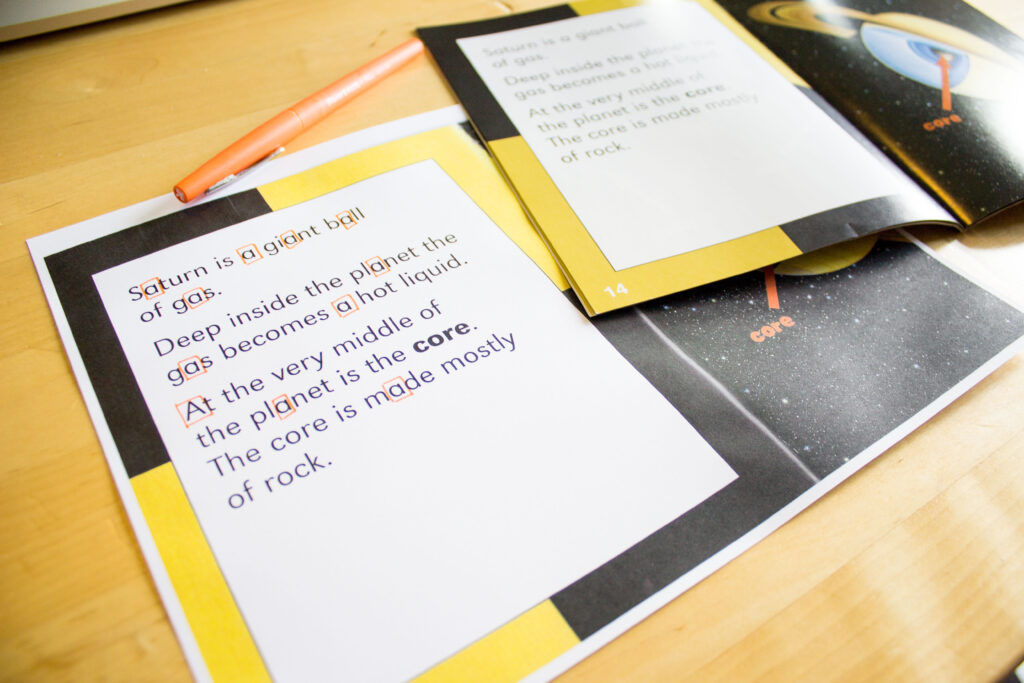
📚 Book hunts: Students use sticky notes or highlighters to find the target letter on pages.
🖊️ Handwriting centers: Practice formation with focused handwriting pages.
Step 5: Review Letters All Year Long
Teaching letters isn’t one-and-done. We review throughout the year using:
- My alphabet card routine (grab your free set here!)
- Small group sorts and activities
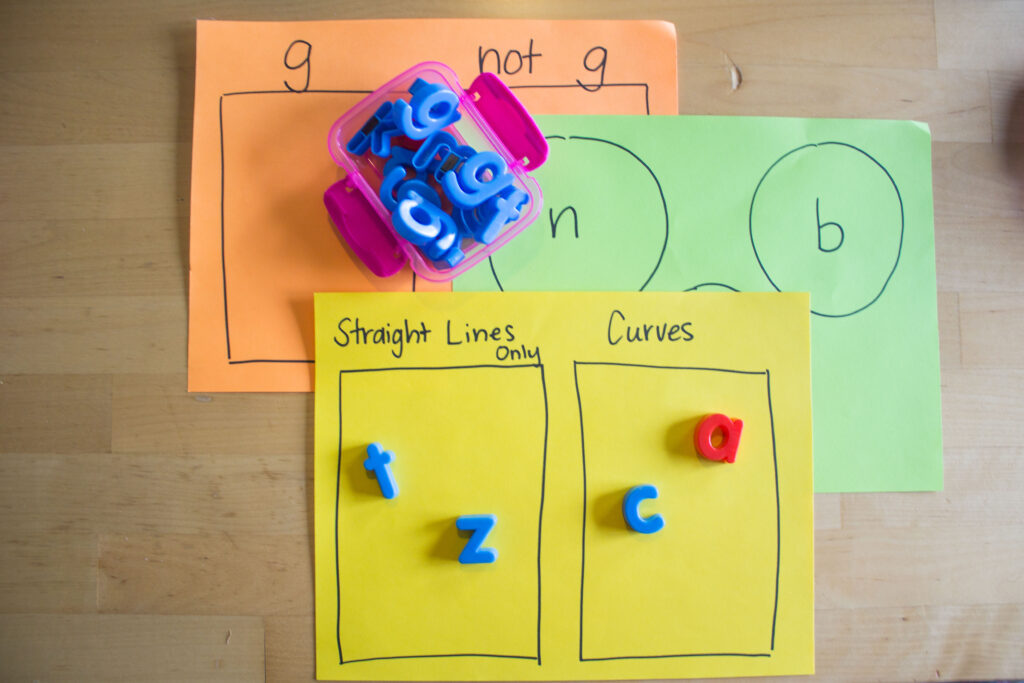
- Quick “noticing” routines—letters with/without curves, target letters, etc.
This ongoing review ensures all learners—whether they’re just starting or ready to move ahead—get the consistent practice they need.
Ready-to-Use Support for Teaching Letters
These routines are simple, engaging, and effective—and they’ve worked for years in cementing letter knowledge in my classroom. But if you’re ready to save planning time and know you have everything you need at your fingertips, I’ve created something for you.
👉 My Exploring Early Literacy: Print Awareness, Letter Knowledge, Letter Sounds & Handwriting resource is a one-stop shop for foundational literacy skills. It includes:
- Pre/post assessments to track progress
- Step-by-step mini-lessons (with scripts)
- Printable activities for whole group, small group, or independent work
- Materials for building print awareness, letter knowledge, sounds, and handwriting

Instead of wondering how to teach these skills—or piecing together activities—you’ll have a complete binder of ready-to-go lessons and activities designed to build strong readers from day one.


Your Turn!
What other fun ways do you help your students practice letter knowledge? Drop them in the comments below—I’d love to hear!

